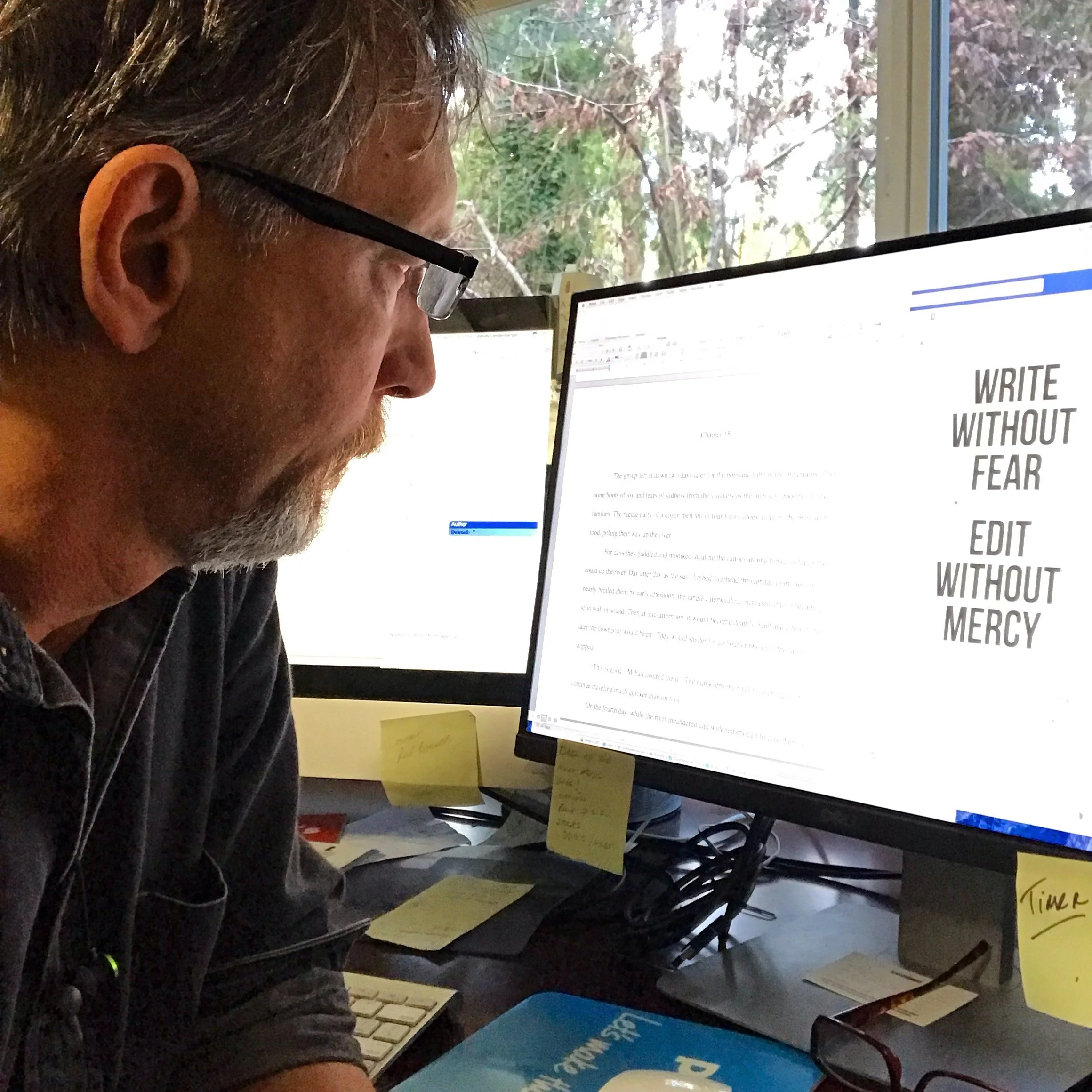
Exterminating Breeding Typos
The Hard Truth About Editing: A Self-Publisher's Confession
I've read the blog posts, listened to the podcasts, and watched the YouTube videos about the business of writing and publishing. One consistent complaint readers have about self-published books? The editing—or lack thereof.
My day job is in a hospital department where we see many outpatients. There's a waiting room where, you guessed it, they wait. Often the patients bring a companion who waits while the patient is seen. Some visitors peruse the old, usually outdated magazines in the racks, but most bring their own reading material: printed books and ebook readers.
Whenever possible, I engage with these folks about their reading choices. Most people are happy to share their preferences in genres and authors. When I ask if they read self-published or independent authors, the overwhelming response—and the reason so many readers avoid indie writers—is the editing. The poor sentence structure, grammar, style, and numerous typos. It's typical for a reader to tell me, "After the fifth or sixth typo, I put the book down and don't go back."
Nearly every traditionally published novel I've read over the past dozen years, even from famous authors, has a few mistakes. I consider myself a typical book consumer: well-read across genres and standard in my tolerance of typos. A few is okay. A dozen is too sloppy.
I Thought I Had It Covered
When I embarked on my self-publishing journey, I knew we're blind to our own mistakes and that professional editing is mandatory for professional results. I have faith in my story and don't want it ruined by typos and grammar errors. For my three-novel series, I used a couple of different line editors to identify grammar, style, and spelling mistakes.
After line-correcting the manuscripts, I sent them to a professional proofreader for a final nitpicking of errors that may have escaped. I felt confident that the proofreader would have an easy job. In my disillusionment, I thought I'd be paying them good money to root out the few typos that escaped my line editor's eyes. I even ran the manuscript through ProWriting Aid, the grammar checker on steroids that should catch everything. It guided me to restructure passive voice sentences, reconsider word choices, and add or drop commas.
Turns out the proofreader earned their pay—and then some. They returned my manuscript with tons (can I say shit-tons?) of flags.
Well... okay. I drop my head, swallow my pride, and get back to work making those corrections. Finally, it's completely cleaned up, and I make the ebook available for free to my friends and followers on Facebook.
Here's what happened: the feedback is good. I'm a happy camper. I submit the manuscript to Amazon for both Kindle and paperback versions. I also submit it to Draft2Digital, the company that distributes to other ebook stores like Apple Books, Nook, Kobo, Scribd, and more.
Yippee, it's out there in the world and I'm a published author! Life is good, my friends.
Then Reality Hits
Then the comments rolled in from those who received the paperback copy.
"I found a few spelling errors and transposed words. Do you want me to pass them on to you?"
A few local friends said, "I found a bunch of typos you should correct."
"Yes, please!" I reply to all. I also ask those local friends who have the paperback to "mark up the book, dog-ear the pages where the typos are, pass it back, and I'll give you a new, clean version when I've made the corrections."
Holy cripes! I'm shocked—shocked, I say—when I see all the dog-eared pages. I'm hoping and praying they're mistaken or merely quibbling over style and word choices. It's a sad day when I see they're right and I've still got a couple dozen errors in my hundred-thousand-word manuscript. Little ones, mind you, but mistakes nonetheless.
Thank God for print-on-demand. I don't have a basement full of poorly edited novels and thank God only a few people have bought the books at this point. I did a "soft" launch, not putting effort into advertising, choosing to wait until I had the whole series complete and out the door.
The Upside of Digital Publishing
My saving grace is that it's so easy to change our novels today—even after publication. I zip through the dog-eared pages to find the circles and arrows pointing to misspellings or transposed words while scrolling through the manuscript on my computer. I make all the corrections within half an hour and reload the manuscript into my formatting program, Vellum. New files are spit out for the paperback and the ebook versions for Kindle, iBooks, Nook, etc.
It takes only a moment to log into Draft2Digital. I delete the old version, no questions asked, and the next person who orders my ebook gets the new, cleaned-up version. Easy peasy.
The only delay is with Amazon. They have to review the new manuscript first. The Kindle version is typically replaced the same day. The paperback, print-on-demand copy can take up to seventy-two hours to be replaced.
What I Learned (the Hard Way)
As I write this blog, my three novels are finally, completely finished and published. I learned that I put them on the market one step too soon. I needed another proofreading team—after I paid the professionals—to give the books a final good scrubbing. As I said, my saving grace is that because I hadn't done a big launch, there have been no reviews ripping on me for an amateurish editing job.
Now I can hear you saying, "But you paid a 'professional' proofreader. Shouldn't they have found all those mistakes?"
Yes. I agree. I wish they would have. I discovered a drawback of self-publishing: not having a large team of seasoned editors that traditional publishers used to provide when they blessed you with publication. It's up to all of us who are self-publishing to go the extra steps and pay the extra dollars to get the job done right.
I paid for all the stages of editing, but I was in too much of a hurry. I could have read through my books when they were returned from proofing, but I wanted to get on to the next book. I didn't think I'd need to read them again, and in retrospect, I'd still be blind to most of the errors.
My Process Now
It took a little longer but didn't cost much more to do it right. I'm fortunate to have local friends good at finding typos and an aunt who tackles proofreading like a rat terrier on a mission from God.
Amazon offers "Author's Proof" copies of your paperback for printing and shipping cost. Sorry, but Prime membership doesn't apply to shipping the Author’s Proofs.
Another bottom line; it's inexpensive to give away copies of printed books that proofreaders can mark up. However, Amazon ships them slow. You may have to wait a couple weeks for them to arrive!
Now I give those "cheap" copies to my second proofing team. Within a week, they're ready to return them to me—all dog-eared and marked up. I'm happy to buy them lunch, a bottle of wine, or in some way show my gratitude for their "volunteer" help.
The Bottom, Bottom Line
It's a chore to find a good team of professional editors that you can afford. It's a chore to find qualified friends or acquaintances who will take that last step for quality—to read your work and mark it up after you've already paid the pros. For me, it's worth it. I put a lot of thought and time into my stories. I don't want to be an author who has reviews noting how poor editing was distracting to the story.
How about you? If you've self-published, how has your experience been with editors and typos when you thought you were finished? Drop me a comment or question at: randylscott@randco.me